What to Know Before Building a Custom Home in an HOA
by Madsen Homes
Buying a lot in a neighborhood with an HOA can mean well-maintained common areas, architectural consistency, and a community that holds its value over time. It can also mean an 80-page document of single-spaced requirements that governs everything from the color of your roof to where a dumpster can sit during construction.
Neither of those things should talk you out of building in an HOA. But they should talk you into understanding what you're working with before the process starts.
HOAs and ACCs Are Not All the Same
The first thing to understand is that HOA requirements vary dramatically from one subdivision to the next. Some are relatively simple, a short list of prohibited materials or restricted roof types. Others are more thorough, requiring full architectural review of your plans, exterior materials, and finishes before you're allowed to break ground.
You'll also hear the term ACC, which stands for Architectural Control Committee. While an HOA typically governs the neighborhood broadly, an ACC is more specifically focused on plans and exterior design. In practice, they often overlap and sometimes operate as a single group. Knowing which body you're dealing with and what they control matters before your design process begins.
The range of what HOAs regulate is wide. Some subdivisions prohibit certain roofing materials like metal roofs or require specific ones like flat TPO roofs. Some restrict exterior lighting types or dictate where certain materials can be placed on the facade. Others require that the entire design of your home, every exterior material, every architectural detail, be submitted and approved before the first day of excavation.
Read the Documents Before You Buy the Lot
This is the most important thing we can say in this post. Before you purchase a lot in an HOA community, read the CC&Rs. The Covenants, Conditions, and Restrictions are the governing documents for what you can and cannot do on that property. They exist before you arrive and they will be there after you leave.
Some of those restrictions may be things you'd never notice or care about. Others might directly conflict with something that matters deeply to you. If a metal roof is important to you and the subdivision prohibits them, that's a conversation worth having before you own the lot, not after.
You don't need to be a lawyer to read CC&Rs, but you should be looking for anything that touches on the things you care most about. If something is unclear, a builder familiar with that subdivision can often help you interpret the language, especially since what's written and what the HOA actually enforces or allows as an exception don't always match perfectly.
HOA Approval Can Affect Your Timeline
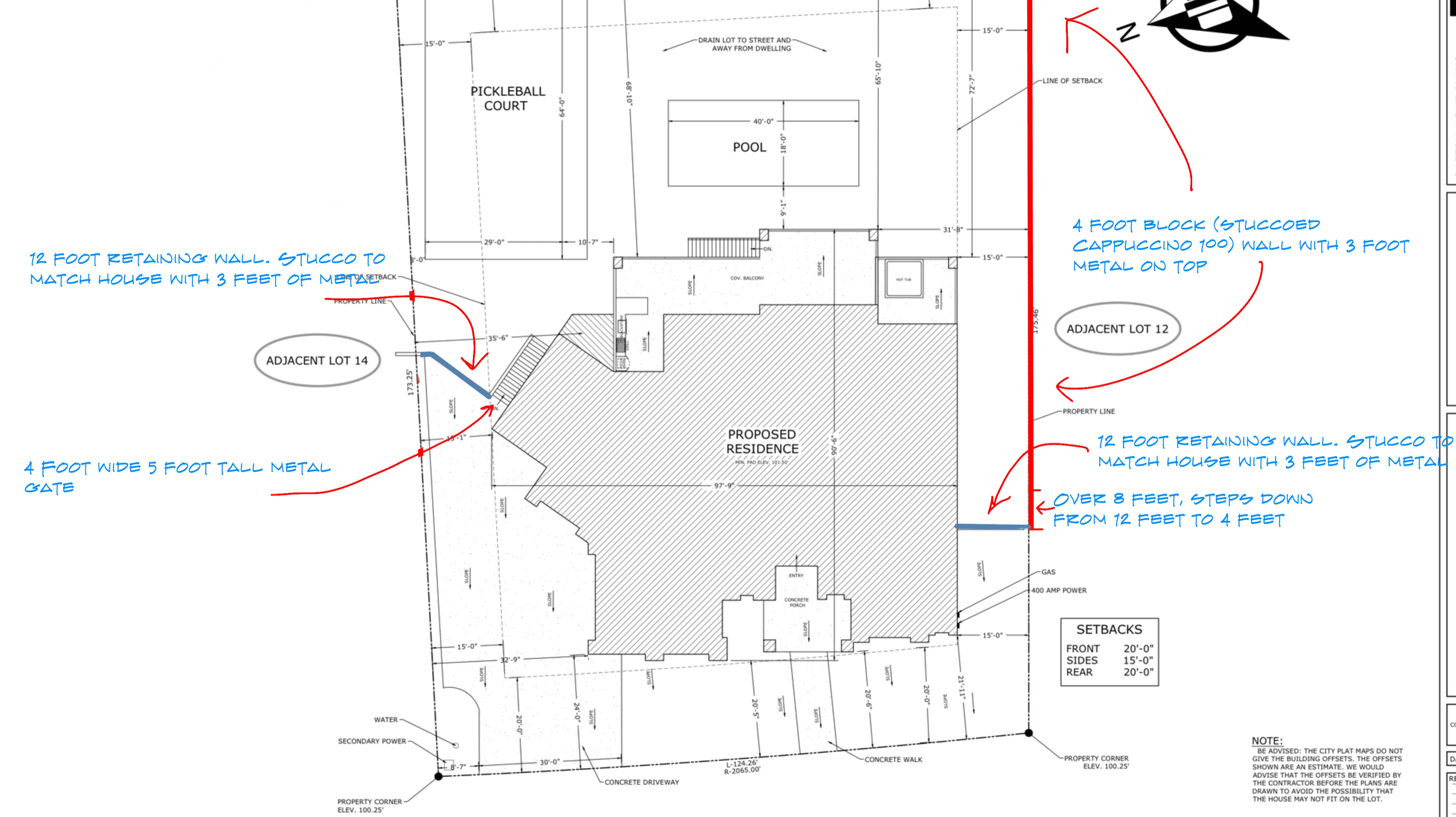
If your subdivision requires architectural approval before construction begins, that approval happens during the design phase. The timeline for that process depends entirely on the HOA.
Some committees move quickly. A straightforward submission to a responsive HOA can come back approved in three to four weeks. Others meet monthly or bi-weekly, require revisions, and can take several months to reach a final approval. If the HOA requests changes to your design, that adds more time spent on revisions and resubmissions before you can move forward.
The practical takeaway is this: if you're building in an HOA that requires full plan approval, build extra time into your expectations for the design phase. Once approval is in hand, construction typically proceeds on a normal timeline unless something changes on site that requires a new approval.
The Details Can Be Very Specific
HOA requirements can be more granular than people expect. It's not just architectural style or roofing material. It can be the color of equipment on site, where materials get staged, or how waste is managed during the build.
On one of our Southern Utah builds, a dumpster kept showing up in the wrong color and the wrong spot. The HOA had specific rules for both, and what looked like a minor logistical issue turned into a few days of calls to sort out. It didn't derail the project, but it was a good reminder: some HOAs enforce their guidelines closely. You need a builder who knows them and stays on top of it through the whole build, not just at design approval.
Exceptions Exist, But They Aren't Guaranteed
HOAs sometimes make exceptions. Sometimes a design choice that isn't explicitly permitted can be approved if it fits the character of the community and the homeowner makes a compelling case. But exceptions are at the HOA's discretion, and they come with their own complications.
For example, we had a client who wanted a metal roof on their home even though it wasn’t an approved material. The HOA had previously denied the same request from another homeowner because it didn't fit that home's architectural style. In our client's case, we believed it did match the character of the community and the style of the home. The HOA was concerned that granting an exception would open them up to conflict with the homeowner whose request had been denied under different reasoning. They ultimately decided not to grant an exception.
We showed our client the acceptable alternatives, gave our recommendation, and they chose a different direction they were happy with. This is a real example of how the process works and why going in with flexibility matters. Your builder can advocate for you, make the case, and push back where it's reasonable to do so. What they can't do is override the HOA's decision.
Your Builder Needs to Be Approved Too
Some HOAs and ACCs require that the builder working in their subdivision be on an approved builder list. This isn't something a homeowner needs to manage. It's the builder's responsibility to obtain and maintain that approval. The process varies by subdivision and can involve paperwork, a meeting, a fee, or other requirements set by the HOA.
If you're considering a lot in a community with this requirement, it's worth asking your builder early whether they're already approved or what the process looks like to get there. It shouldn't create a problem, but it's better to know upfront than to discover it mid-process.
Building in an HOA in Southern Utah
The Hurricane, St. George, and Washington City areas include a range of communities with HOA oversight, from relatively relaxed subdivisions to highly structured master-planned neighborhoods with detailed architectural standards. The growth across Washington County has brought a wide range of HOA types, and the requirements vary significantly from one development to the next.
If you're looking at lots in communities like those in Black Desert, Sand Hollow, or in newer developments throughout Hurricane and the surrounding region, understanding the specific HOA requirements for that subdivision before you finalize a lot is worth the effort. What applies in one neighborhood may be completely different two streets over.
You Can Still Build a Home You Love
Building in an HOA means working within limits. That's real and worth acknowledging. You may not be able to use every material you want or design every detail exactly as you imagined it. In some communities those limits are minor. In others they're more significant.
What they don't mean is that you're building someone else's house. Within the guidelines, there is almost always meaningful room to create something that reflects your taste, fits how you live, and is genuinely yours. A good builder knows how to find that room and make the most of it. They know when to push back, when to pivot, and how to show you options you can actually feel good about.
If you're looking at lots in Southern Utah and want to talk through what building in a specific community might look like, we're happy to have that conversation.
Check out related blog posts and projects:
How Do I Know If a Builder Is Good? A Guide for Southern Utah Custom Homes
Questions to Ask Before Hiring a Custom Home Builder in Southern Utah
Find more blogs about building a custom home