What's the Difference Between a Spec Home and a Custom Home?
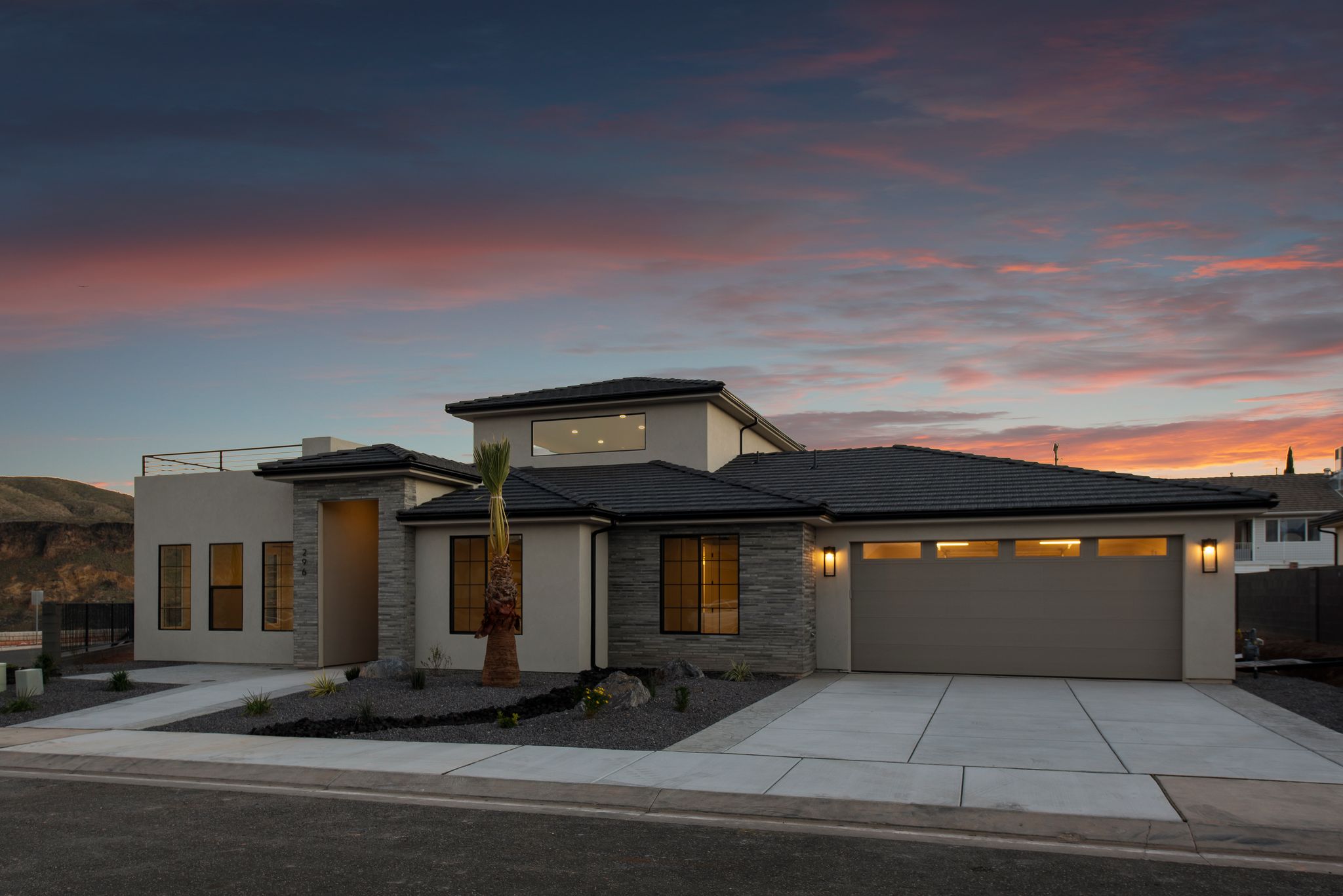
by Madsen Homes
If you're starting to research new home construction in Southern Utah, you've probably run into these terms already: spec home, custom home, semi-custom, or production build. Builders use them loosely, and they don't always mean the same thing from one company to the next. This blog post is going to explain what each type actually means, where the real differences lie, and how to figure out what kind of builder you're actually talking to when you start making calls.
The Full Spectrum: Four Types of New Home Construction
Most people think of this as a simple two-way comparison — spec or custom. In reality, new home construction spans a wider range, and understanding the full picture helps you ask better questions and make a clearer decision.
Production Homes Production builders construct homes at volume using a set of predetermined floor plans and finish packages. You typically choose from a catalog of options rather than designing from scratch. These are the large subdivision developments where every home follows one of a handful of templates. The tradeoff is speed and predictability: production homes are built efficiently and often come in at lower price points, but the level of personalization is limited. You're choosing within a system, not designing outside of it.
Spec Homes A spec home, short for speculative home, is built by a builder without a specific buyer attached from the start. The builder makes the design decisions, constructs the home, and sells it when complete or near complete. Spec homes are new construction, so you get the benefit of a fresh build, but the major choices have already been made. Depending on how far along the home is when you enter the picture, you may have some input on finishes. If the home is nearly finished, you're buying what's there. Spec homes often come in at a lower price point than fully custom builds and can close much faster since much of the work is already done.
Semi-Custom Homes Semi-custom falls between spec and true custom. A builder offers a set of established floor plans, and the buyer makes selections and modifications within that framework. You have real input on finishes, fixtures, and sometimes layout adjustments, but the overall structure is largely predetermined. For buyers who want more personalization than a production home offers but aren't ready for the full custom process, semi-custom is often a good fit. The design process is faster and the decisions are fewer.
True Custom Homes A true custom home is designed from the ground up around the buyer. The floor plan, layout, finishes, features, and architectural details are all specific to that household and that lot. Nothing is templated. The buyer is involved in every significant decision, typically working alongside a designer and builder from the earliest stages. True custom takes more time and requires more involvement, but the result is a home that reflects exactly how the people living in it want to live.
Where Spec and Custom Overlap
The lines between these categories are blurrier in practice than they are on paper. A builder who primarily does custom work may also build spec homes between projects. A semi-custom builder may offer enough flexibility that the process feels more personal than the label suggests. A smaller builder doing semi-custom work will often give you more attention and responsiveness than a large production company doing true custom builds.
What matters more than the label is how the specific builder actually operates and what level of involvement they offer you in the process.
How to Tell What Kind of Builder You're Actually Talking To
When you sit down with a builder, the category they put themselves in matters less than the answers they give to a few direct questions. Here's what to ask:
Can I bring my own designer, or do you have one? True custom builders typically have a design process built in or work closely with designers. If a builder has a designer on their team who works with you on selections and finishes, that's a meaningful sign of how invested they are in the personalization side of the build.
Can you build on my lot, or do I have to build in one of your developments? Production and some semi-custom builders are tied to specific communities or subdivisions. A true custom builder can typically work on any buildable lot. This is one of the clearest signals of where a builder actually falls on the spectrum.
Do you have floor plans I choose from, or can we design the layout from scratch? If the answer is "choose from our plans," you're likely looking at production or semi-custom. If the answer is "we work with an architect or designer to create your plan," you're looking at custom territory.
How many decisions will I actually be making? A production home might involve choosing a cabinet color and a carpet option. A true custom home involves hundreds of decisions across every category of the build. The scope of your involvement is one of the clearest indicators of where on the spectrum a builder operates.
What does your design process look like before construction starts? Custom builders have a defined pre-construction design process. If a builder can't clearly describe how selections are handled, how the budget is built, and what happens before ground breaks, that's worth noting.
Where Madsen Homes Fits
Madsen Homes is a smaller builder, and that matters as much as any category label. We build true custom homes for clients who want full involvement in the design process. We also build spec homes and have worked on semi-custom and production-style projects. The range of what we do is wide.
What stays consistent regardless of project type is the level of attention. As a smaller company, even a project that falls more toward the semi-custom end of the spectrum tends to feel more personal than it would with a larger builder. You're not a number in a queue. The people managing your project are the same people you talked to from the beginning.
If you're trying to figure out whether a Madsen build is the right fit for what you're looking for, the most direct path is a conversation. We'd rather spend time helping you understand your options than have you commit to something that isn't the right match.
A Quick Reference
Type | Floor Plan | Finish Control | Lot Flexibility | Timeline |
Production | Choose from templates | Limited | Builder's land only | Faster |
Spec | Already decided | Little to none | Builder's land | Fast — often move-in ready |
Semi-Custom | Choose from plans, some modifications | Moderate | Varies | Moderate |
True Custom | Designed from scratch | Full | Build anywhere |
Frequently Asked Questions
What does spec home mean? Spec is short for speculative. A builder constructs the home without a specific buyer lined up, making all the design decisions themselves, then sells the finished or nearly finished home. You get new construction without the full custom design process.
Is a spec home the same as a production home? Not exactly. Production homes are built at volume by large builders using standardized plans across entire subdivisions. Spec homes can be built by smaller builders on individual lots. Both involve the builder making most design decisions upfront, but the scale and context are different.
Can I make changes to a spec home? It depends on how far along construction is when you enter the picture. Early in the build, there may be flexibility on finishes and some features. If the home is near completion, most decisions are already locked in.
Is a custom home more expensive than a spec home? Generally yes, though the gap depends on what you're comparing. A spec home with high-end finishes in a desirable location can cost as much as a modest custom build. The cost difference reflects the level of personalization and the time involved in the design process.
How do I know if a builder is truly custom? Ask whether they build on your lot, whether you work with a designer on your specific selections, and whether the floor plan is designed for you or chosen from a set of existing plans. The answers will tell you more than the label on their website.
What is a semi-custom home? A semi-custom home uses an existing floor plan as the starting point, with the buyer making selections and sometimes modifications within that framework. It offers more personalization than a production or spec home but less than a true custom build.
Madsen Homes builds custom, semi-custom, and spec homes in Hurricane, St. George, Washington, Ivins, and throughout all of Washington County and Southern Utah.
Find more blogs about building a custom home